What Is the Relationship Between Asset Price Bubbles and Systemic Risk at Bank Level?

Why do some financial bubbles lead to financial crises while others do not? In this video, ISABEL SCHNABEL examines the role that individual financial institutions play in the relationship between asset price bubbles and systemic risk. Employing the BSADF test to identify asset bubbles and ΔCoVaR (the Delta Conditional Value-at-Risk) to measure systemic risk at the individual bank level, Schnabel highlights a clear relationship between bank size and systemic risk. Suggesting that regulatory intervention might be better directed at institutions bearing higher risks than at the system in its entirety, this research makes an important contribution both to our understanding of financial crises and our ability to prevent them going forward.

DOI:

https://doi.org/10.21036/LTPUB10780

University of Bonn (Rheinische Friedrich-Wilhelms-Universität Bonn)

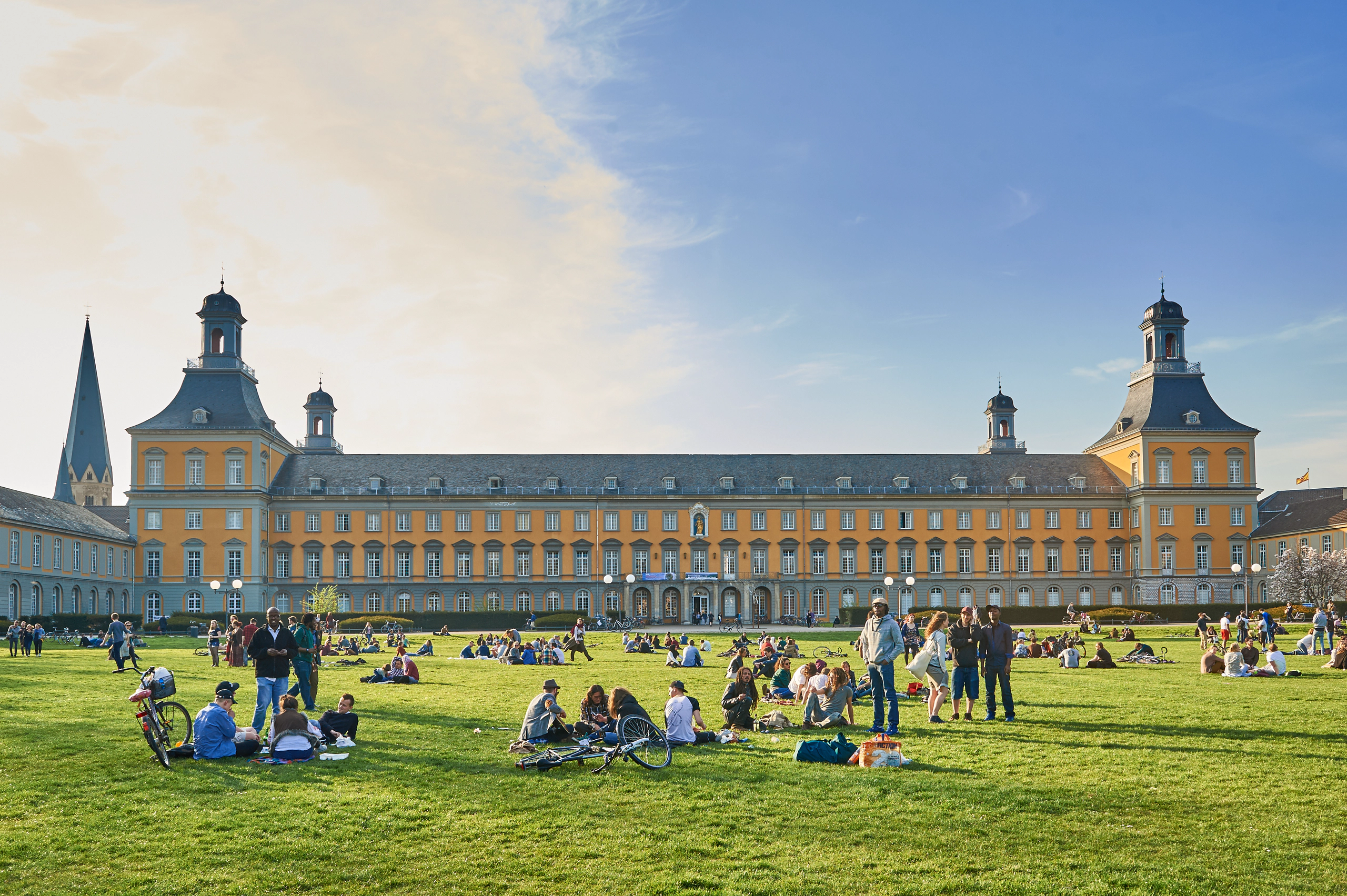
Bonn is one of the large universities in Germany, with around 36,000 students, 550 professors, 6,500 other staff staff. It offers a wide disciplinary spectrum comprising some 200 different degree programmes, from Agricultural Science to Tibetan Studies. This diversity is what characterizes Bonn as a full-range university with a strong international orientation. In many international university rankings Bonn is placed among the 100 best universities in the world.Its academic and research profile features internationally renowned specializations in the fields of Mathematics, Physics/Astronomy, Economics, Chemistry, Pharma Research, Biosciences, Genetic Medicine, Neurosciences and Philosophy/Ethics. Other disciplines, such as Geography and Law, are of outstanding importance within the German research scene. The Rheinische Friedrich-Wilhelms-Universität Bonn is rooted in a long tradition going back almost 200 years. It was founded in 1818 by Friedrich-Wilhelm III, the Prussian king whose name it bears. Imbued with the spirit of Wilhelm von Humboldt, the university quickly joined the circle of Germany's most distinguished universities and became a major pole of attraction for leading scholars as well as students.The list of famous professors ranges from the astronomer Friedrich Wilhelm Argelander (1799-1875), through the chemist August Kekulé von Stradonitz (1829–1896) and political economist Josef Schumpeter (1883–1950) to the philologist Ernst Robert Curtius (1886–1956) and the theologists Karl Barth (1886–1968) and Joseph Ratzinger (born 1927), now Pope Benedict XVI. Bonn's best-known students include Heinrich Heine, Karl Marx, Friedrich Nietzsche, and Konrad Adenauer. The university is proud of a long list of award-winning scientists and scholars, with about twenty Leibniz Prize winners and around thirty ERC grantees. In the last three decades two professors have received the Nobel Prize: Wolfgang Paul (for Physics, 1989) and Reinhard Selten (for Economics, 1994). (Source: University of Bonn)

University of Bonn (Rheinische Friedrich-Wilhelms-Universität Bonn)

Original Publication

Asset Price Bubbles and Systemic Risk

Markus K. Brunnermeier

,

Simon Rother

,

Isabel Schnabel

Published in 2020