How Does Empathy Affect Trade-Offs People Are Willing to Make Between Their Own and Other’s Income?

The research presented in this video focuses on the question how empathy affects economic choice-behavior. In order to refine existing models of decision-making, two different concepts of empathy “imagine-self” and “imagine-other”, the latter requiring a higher level of sophistication, were included in game theoretic models. As JUSTIN VALASEK explains, it is established that empathy does not necessarily lead to more altruistic behavior and in some settings even the reverse is the case.

DOI:

https://doi.org/10.21036/LTPUB10132

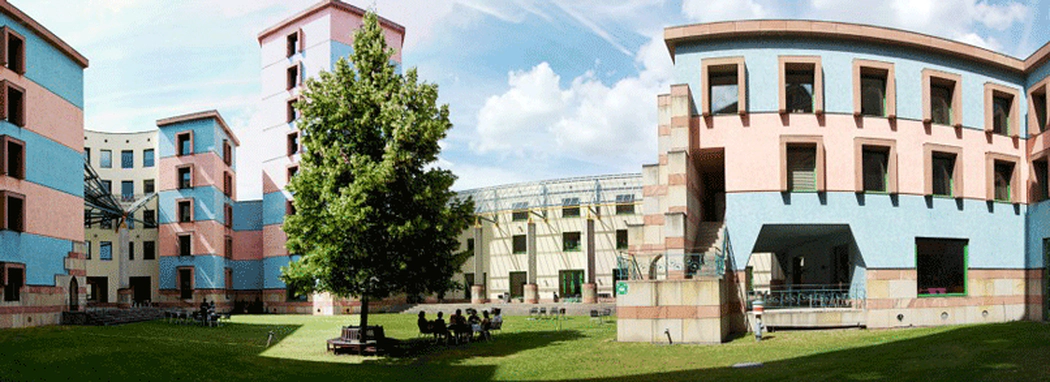
Berlin Social Science Centre (WZB)

The WZB Berlin Social Science Center investigates societal change. The research focus is on problems of modern societies in a globalized world. Research areas include education and work, migration and the dynamics of political systems, market and choice, international politics and law. WZB research is theory-based, problem-oriented, often long-term and mostly based on international comparisons. Around 160 German and international researchers work at the WZB, including sociologists, political scientists, economists, legal scholars and historians. Research results are published for the scientific community as well as for experts in politics, business, the media and civic organizations. As a non-university research institute, the WZB is member of the Leibniz-Association. The WZB closely cooperates with universities in Berlin and beyond as well as with research institutions abroad. The WZB was founded in 1969 by members of the German parliament. The WZB is funded by the Federal government, he state of Berlin, and the community of German states. (Source: WZB)

Berlin Social Science Centre (WZB)

Original Publication

A Note on Empathy in Games

Jan Grohn

,

Steffen Huck

,

Justin Valasek

Published in 2014