How Do Moroccans Residing in Different Countries Perceive the Modernized Family Code?
DOI:
https://doi.org/10.21036/LTPUB10258Researcher
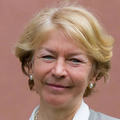
Marie-Claire Foblets is Director of the Department Law & Anthropology at the Max Planck Institute for Social Anthropology in Halle/Saale, Germany, and Honorary Professor of Law & Anthropology at the Martin-Luther-University Halle-Wittenberg, Germany. Her interests include Islam in Europe, religious diversity in a secular context and international family law. Before joining the Max Planck Society, Foblet held teaching positions at the universities of Antwerp and Brussels as well as an Erasmus lectureship on Comparative Islamic Law at Harvard Law School. In 2004, she was awarded the Francqui Prize, the most distinguished scientific award in the humanities in Belgium.
Original Publication
Le Code Marocain de la Famille. Incidences au Regard du Droit International Privé en Europe
Marie–Claire Foblets
,Jean-Yves Carlier
Published in 2005