How Do Aesthetic Experiences Function in the Brain?

Aesthetic experiences make a vital contribution to our lives. In this video, focusing on responses to artwork, architecture and natural landscapes, EDWARD VESSEL explores how aesthetic experiences function in the brain. Employing functional Magnetic Resonance Imaging (fMRI), Vessel attempts to correlate subjects’ aesthetic responses with data from two brain regions, the ventral occipitotemporal cortex and the default mode network. Extending our understanding of the role and function of these brain networks, Vessel’s research may have important implications beyond cognitive neuroscience, for how we learn and for human health and well being.

DOI:

https://doi.org/10.21036/LTPUB10774

Max Planck Institute for Empirical Aesthetics

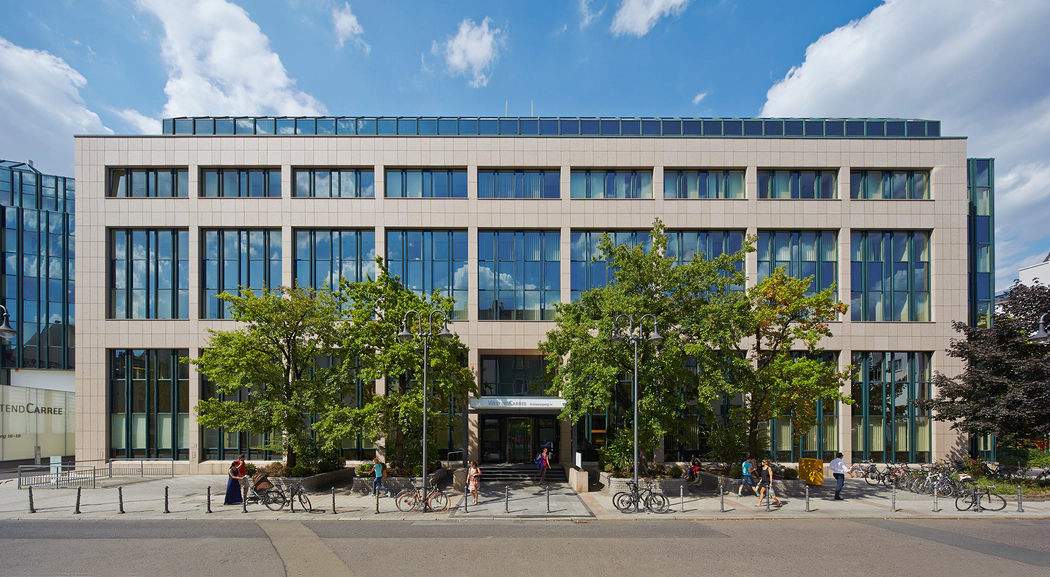
The Max Planck Institute for Empirical Aesthetics (MPIEA) was founded in 2013 in Frankfurt am Main, Germany, and is part of the Max Planck Society. In a joint effort of researchers from the humanities and the natural sciences, it explores who aesthetically appreciates what, for which reasons and under which situational and historical circumstances, and analyzes the functions of aesthetic practices and preferences for both individuals and societies. In this interplay between the humanities and the natural sciences, the MPIEA draws on a broad range of multidisciplinary expertise as well as a variety of methods. The primary focuses in our research on the many nuances of aesthetic perception include the individual, cultural, and historical differences among aesthetic preferences; the cognitive and affective mechanisms governing aesthetically evaluative perception as well as their neural, physiological, and behavioral correlates, the functions of aesthetic experiences for personal development, subjective well-being, and social communication.

Max Planck Institute for Empirical Aesthetics

Original Publication

Stronger Shared Taste for Natural Aesthetic Domains than for Artifacts of Human Culture

Edward A. Vessel

,

Natalia Maurer

,

Alexander H. Denker

,

G. Gabrielle Starr

Published in 2018

Art Reaches Within: Aesthetic Experience, the Self and the Default Mode Network

Edward A. Vessel

,

G. Gabrielle Starr

,

Nava Rubin

Published in 2013

The Default-mode Network Represents Aesthetic Appeal that Generalizes Across Visual Domains

Edward A. Vessel

,

Ayse Ilkay Isik

,

Amy M. Belfi

,

Jonathan L. Stahl

,

G. Gabrielle Starr

Published in 2019