How Can We Encourage More Widespread Use of Hydrogen Fuel Cells?

One very promising way of producing energy in an environmentally friendly manner is via hydrogen fuel cells. In this video, ALBA GARZÓN MANJÓN explains that a fundamental barrier to the widespread adoption of this technology is the prohibitive cost of the noble metals that act as catalysts in the fuel cell. Garzón Manjón’s research seeks to identify alternatives, centering her search on high entropy alloy materials. Highlighting the importance of the size, composition and stability of any material used, the research shows that a body centeredcubic structure which is high in chromium and cobalt and low in manganese is most suitable. The new catalyst is also shown to use less energy to initiate the reaction than noble alloys.
DOI:
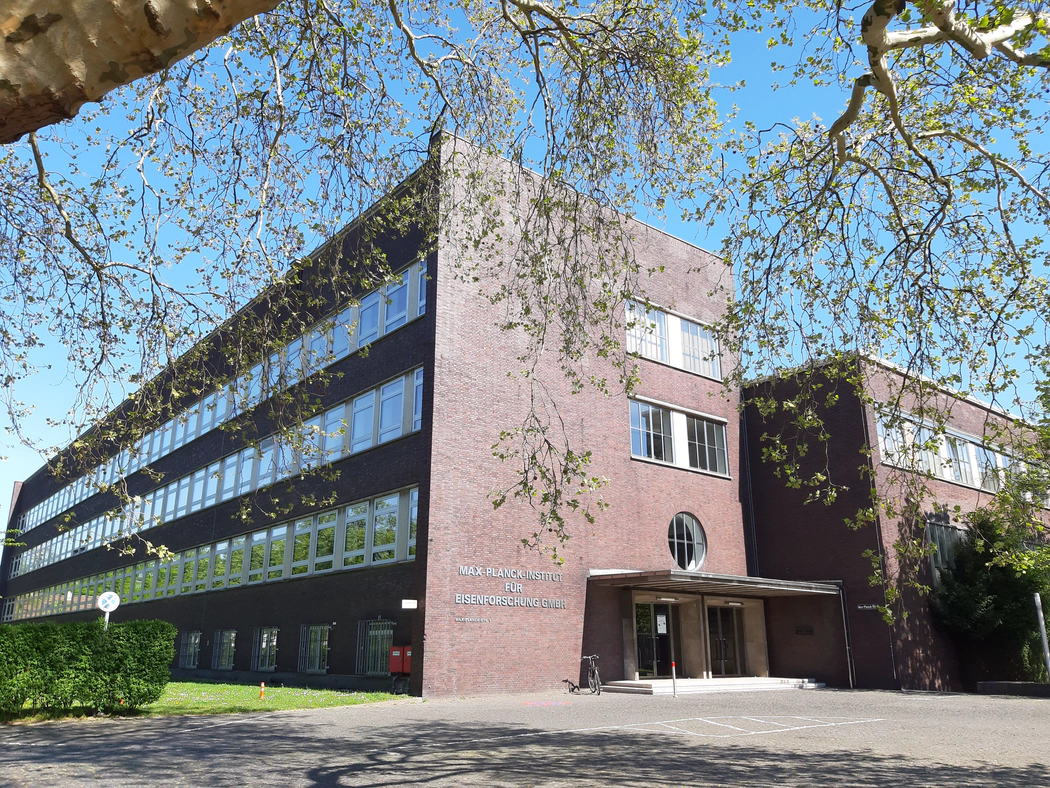
https://doi.org/10.21036/LTPUB10939Max-Planck-Institut für Eisenforschung
Novel alloys for automotive lightweight design and airplane turbines, materials for sustainable energy conversion and storage, and the development of big data and machine learning methods – these are just a few examples of the research areas that are being investigated by the scientists of the Max-Planck-Institut für Eisenforschung. The team of engineers, material scientists, physicists, and chemists develops tailored materials and methods for mobility, energy, infrastructure, and information. To this end, the researchers study complex materials with atomic precision under real environmental conditions.

Original Publication
Sputter Deposition of Highly Active Complex Solid Solution Electrocatalysts into an Ionic Liquid Library: Effect of Structure and Composition on Oxygen Reduction Activity
Alba Garzón Manjón
,Tobias Löffler
,Michael Meischein
,Hajo Meyer
,Joohyun Lim
,Valerie Strotkötter
,Wolfgang Schuhmann
,Alfred Ludwig
,Christina Scheu
Published in 2020