How Can Chemicals Be Produced in a More Sustainable Process?

KAI SUNDMACHER’s aim is to introduce a more sustainable process to chemicals production. As he explains in this video, for new technological developments in chemical process engineering a new methodology is needed that is able to include many decision variables in order to find the best pathway from the raw materials to the target product. Therefore, his research team developed an elementary process function (EPF) methodology which allows them to analyze the pathway of fluid elements and the goal is to steer this fluid element along an ideal pathway towards the final state, thereby discovering the most sensitive manipulating variables. Already, the researchers have found many real-world applications for this EPF methodology, such as in the chemicals production industry, in solids production and in biotechnology.
DOI:
https://doi.org/10.21036/LTPUB10525Max Planck Institute for Dynamics of Complex Technical Systems
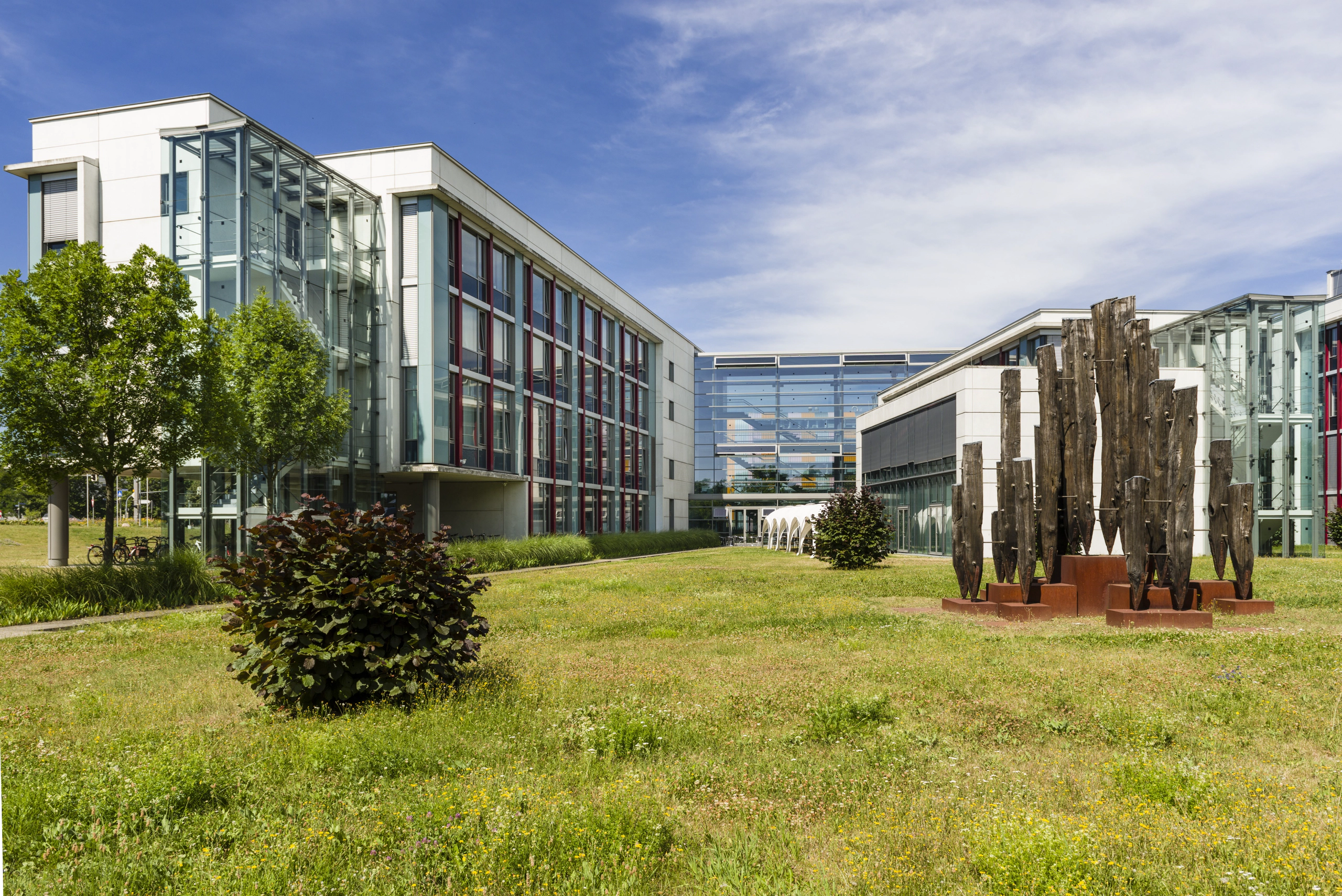
The dynamics of recent global economic and ecologic changes necessitate both the development of sustainable production processes and the establishment of future-oriented technologies. This applies particularly to the more efficient production of chemicals and (bio)pharmaceuticals as well as to the transformation and storage of renewable energies. The main goal of the Max Planck Institute for Dynamics of Complex Technical Systems in Magdeburg (MPI) is to contribute to the establishment and design of processes with ever-increasing complexity and to their economic, safe and efficient operation. MPI scientists from different disciplines such as process engineering, chemistry, biology, biotechnology, mathematics and computer sciences develop mathematical models and computer-aided methods to simulate dynamic processes and describe their complex behavior in detail. Based on an analysis of the respective system properties, innovative approaches are developed and comprehensively evaluated. Model validation and testing of new concepts are supported by extensive experimental studies both at the laboratory and at the pilot scale level. The MPI, founded as the first engineering institute of the Max Planck Society, started its scientific work in Magdeburg in 1998 and currently employs about 230 people. The current research focus of the institute is on the areas of chemical process engineering, bioprocess engineering, systems biology and synthetic biology, numerical mathematics, energy und process systems engineering as well as systems and control theory. The International Max Planck Research School Magdeburg, a cooperation of the Max Planck Institute and the Otto von Guericke University Magdeburg, provides an excellent training and research program for Ph.D. students.

Original Publication
Towards a Methodology for the Systematic Analysis and Design of Efficient Chemical Processes: Part 1. From Unit Operations to Elementary Process Functions
Hannsjörg Freund
,Kai Sundmacher
Published in 2008
Methodology for the Design of Optimal Chemical Reactors Based on the Concept of Elementary Process Functions
Andreas Peschel
,Hannsjörg Freund
,Kai Sundmacher
Published in 2010
Model-Based Identification and Experimental Validation of the Optimal Reaction Route for the Hydroformylation of 1-Dodecene
Benjamin Hentschel
,Gregor Kiedorf
,Martin Gerlach
,Christof Hamel
,Andreas Seidel‐Morgenstern
,Hannsjörg Freund
,Kai Sundmacher
Published in 2015
Optimal Reactor Design via Flux Profile Analysis for an Integrated Hydroformylation Process
Nicolas Maximilian Kaiser
,Michael Jokiel
,Kevin McBride
,Robert Flassig
,Kai Sundmacher
Published in 2017
Dynamic Flux Balance Modeling to Increase the Production of High-Value Compounds in Green Microalgae
Robert Flassig
,Melanie Fachet
,Kai Höffner
,Paul I. Barton
,Kai Sundmacher
Published in 2016